
Before the team. Before the org. The leader does the inner work first.
Most organizations focus on what AI produces. We focus on what produces that. The same framework applies whether you lead yourself, a team, or an enterprise. What changes is the scope, not the nature of the work. And the work begins with the individual leader.
AI does not create the leadership challenge. It amplifies one that was already there. The leaders who shape AI well are the leaders who have done the inner work to know themselves more honestly than they ever have. Without that work, every prompt, every governance decision, every cultural signal carries the unexamined version of the leader straight into the system.
Before you can lead a team through AI integration, you have to engage with it yourself. Your own practice. Your own reactions. Your own learning edge. The skill you develop in yourself is the skill the organization eventually inherits.
Three conscious attitudes (Cyborg, Explorer, Guardian) replace the three default shadows (Rival, Spectator, Justifier) that quietly stall every leader. The shadows are not character flaws. They are familiar human patterns amplified by new conditions.
Six skills make daily collaboration with AI real, not theoretical. Authentic communication. Critical thinking. Augmented conflict resolution. Hybrid delegation. AiQ (emotional mastery). Adaptive change leadership. Each one developable. Each one observable.
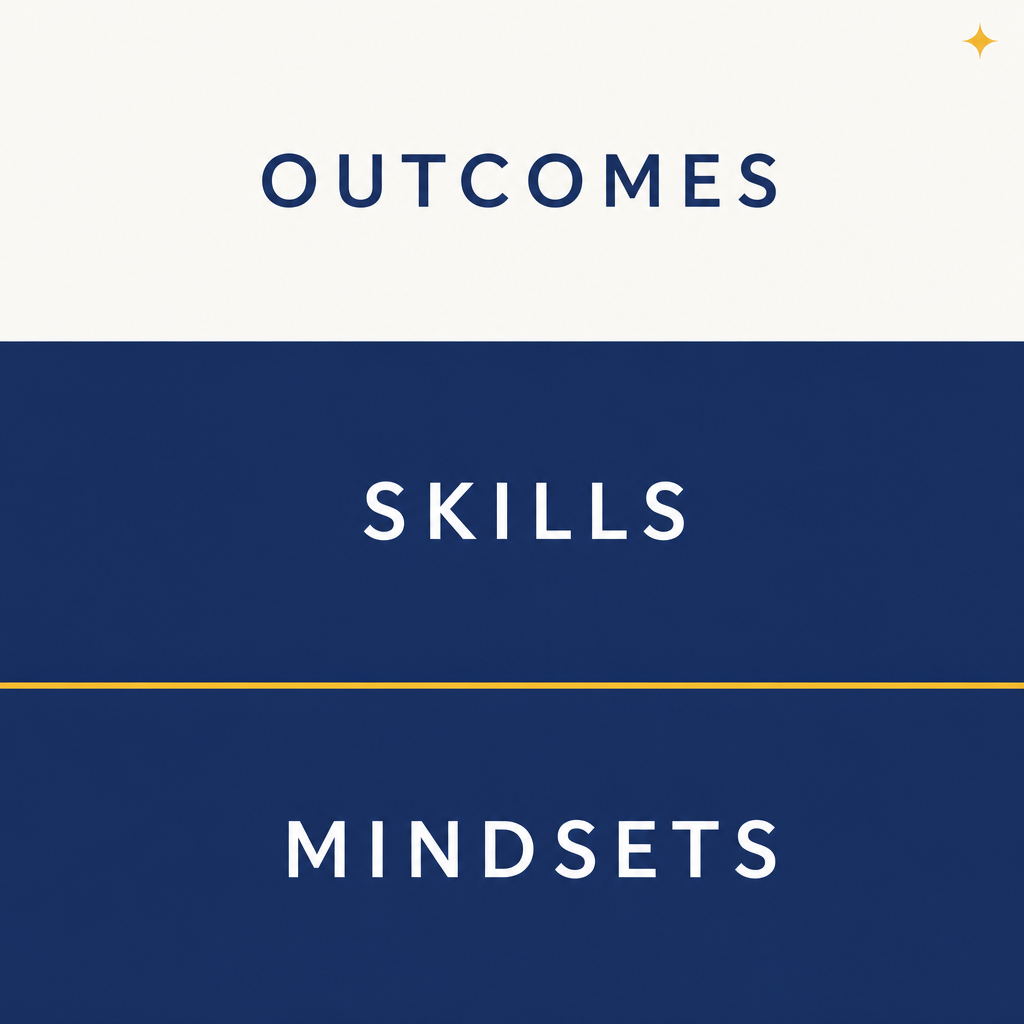
Three levels, one orientation. Outcomes sit on top because they only show up when the layers below are in place. Sustainable results require more than capability. They require the right orientation at the deepest level.
Once the team is integrated with AI, the real work begins. Recursive Teams turns that partnership into compounding performance.
Continue to Recursive Team Performance →